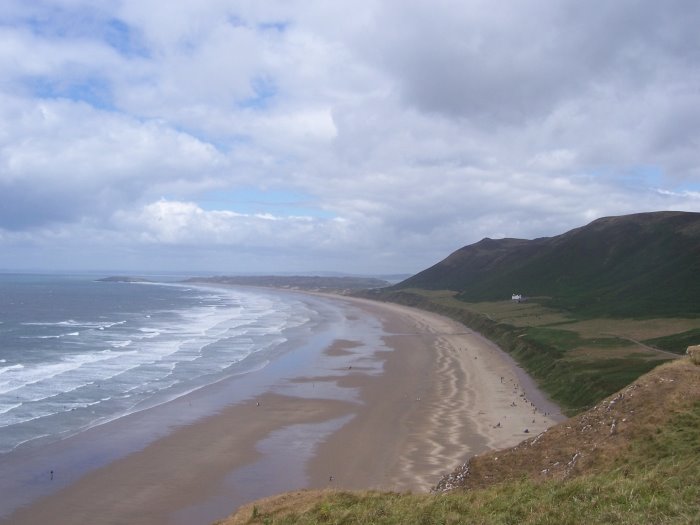
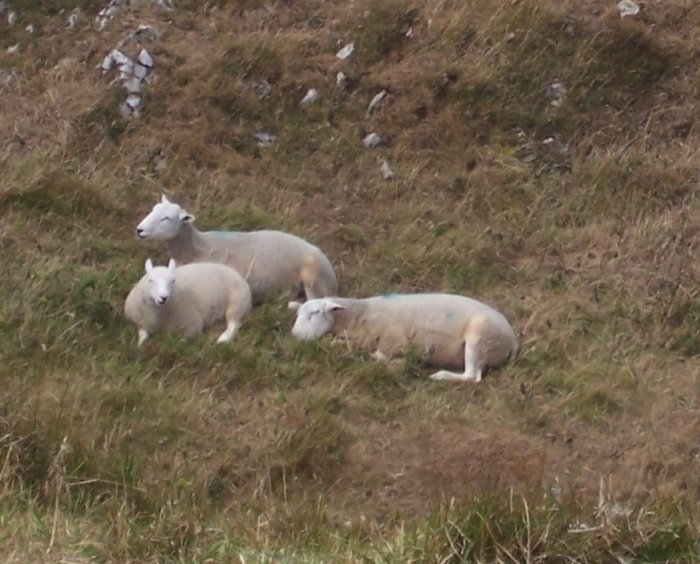
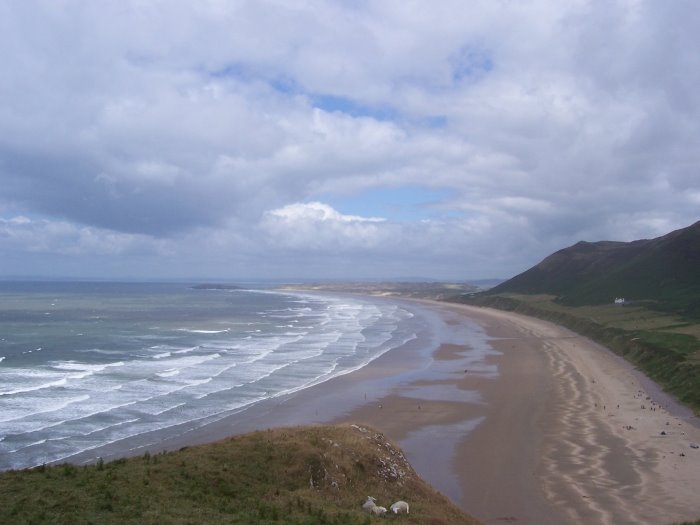
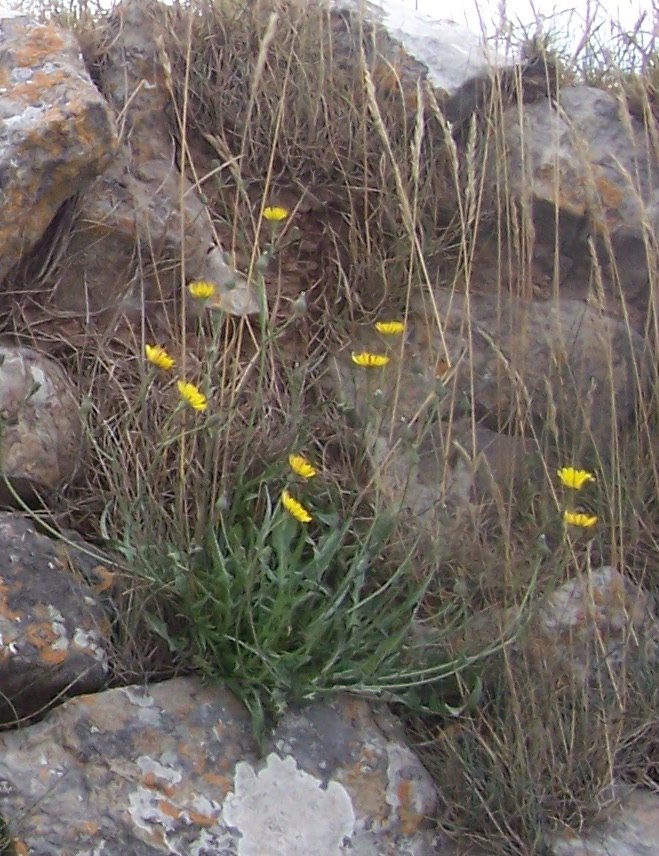
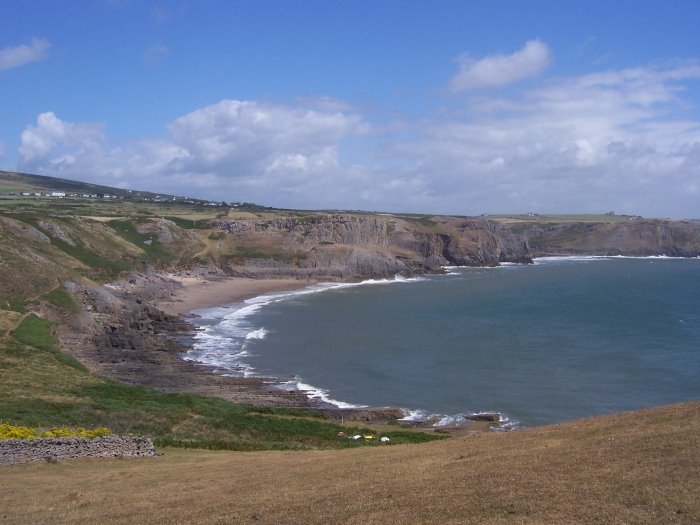
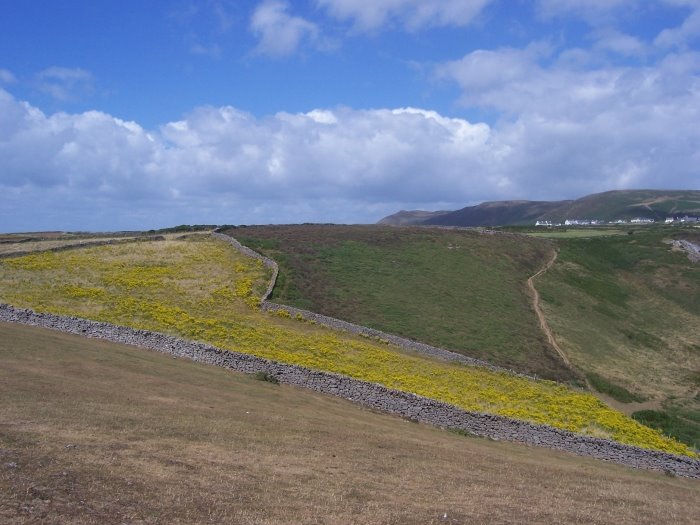
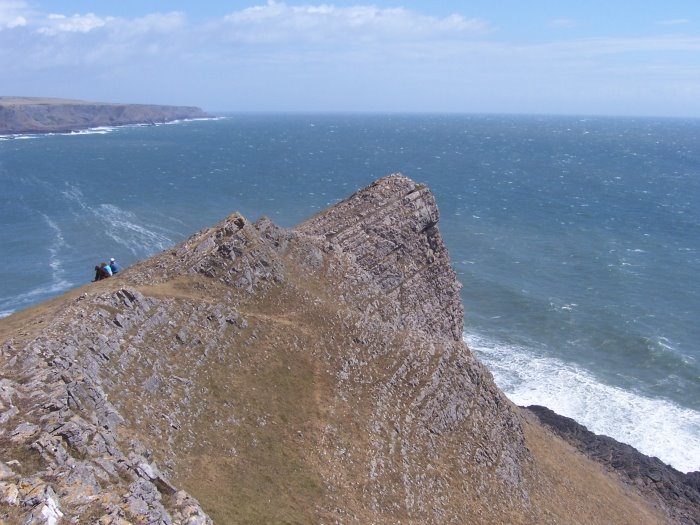
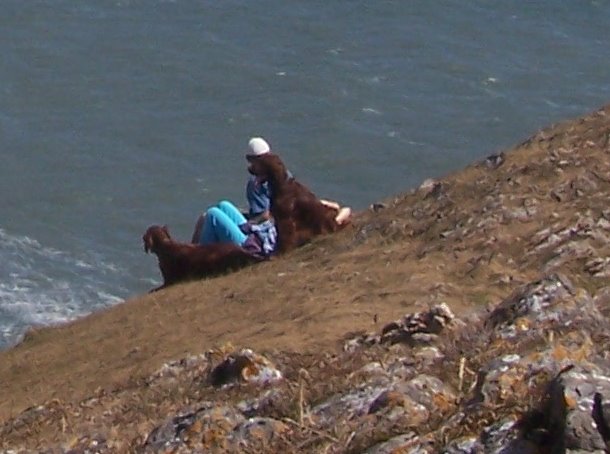
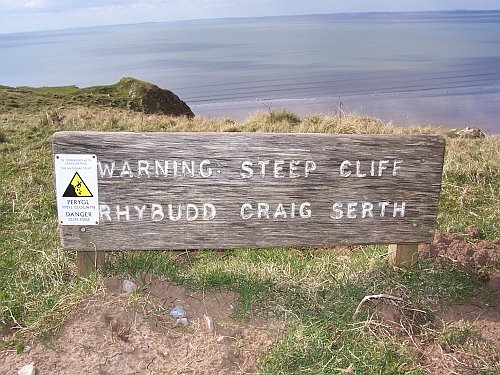
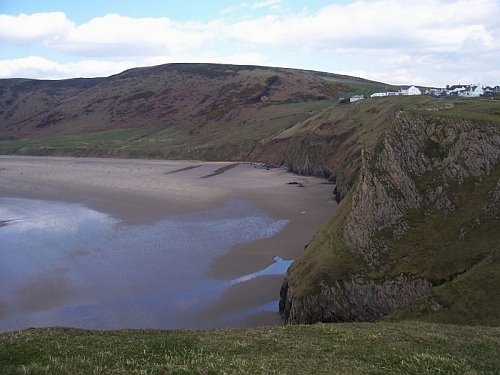
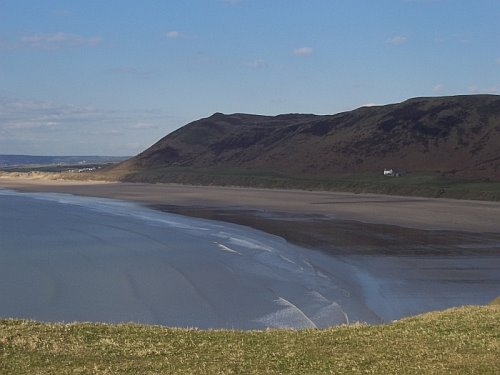
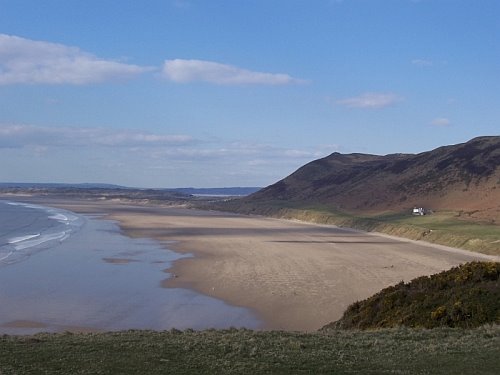
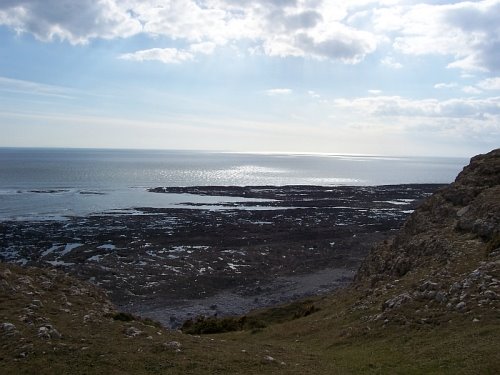
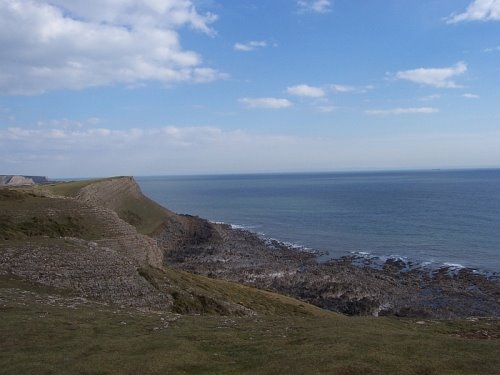
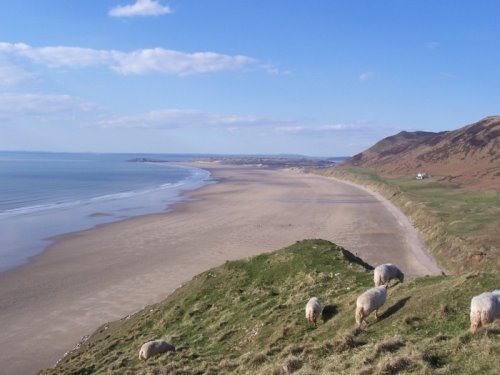
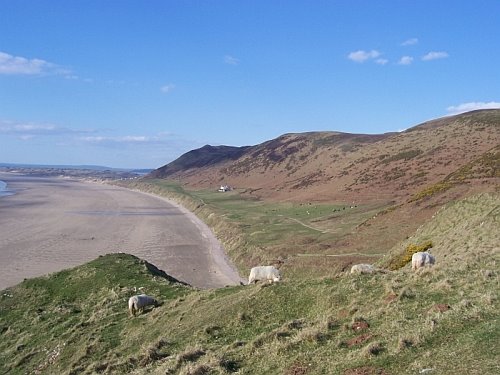
A few years ago, I wrote an article about the apparent arrival of Spring-heeled Jack on the Gower Peninsula, mainly in the areas around Port Eynon, and Overton cliffs. I have reproduced the article, in its entirety, below, with the addition of some images not included in the original.
Introduction
Horatio Tucker was the first local historian to revive the memory of Spring-heeled Jack's activities on the Gower Peninsula, in fairly recent times. He recounted how an other-worldly apparition terrorised the inhabitants of Port Eynon and Overton, in his 1951 book, Gower Gleanings. The Gower Society investigated a little further, and Clifford Bevan gave the results of his findings in 'Spring-heeled Jack': A Nineteenth-century Gower Phenomenon. The article appeared in Volume 52 of the Gower Journal, published in 2001.
General Background
The Spring-heeled Jack phenomenon first manifested in London in the 1830s. Many theories were expounded as to Jack’s origins. Some believed he was an unearthly beast, others suggested he was from another planet, and others still thought he was the devil himself. More pragmatic Londoners suggested he was a man in a costume, carrying some kind of new-fangled, concealed apparatus which allowed him to leap great distances. He almost sounded like an evil, nineteenth century forerunner of James Bond.
Jack was described as tall, slender, and powerfully built, always clad in a black cloak. He was reputedly able to leap vertically in the air, as high as twenty or thirty feet, vaulting high walls, hedges and railings. Witnesses claimed the apparition possessed huge, pointy ears, and red, glowing eyes. He also reportedly spat blue-white flames at his victims.
His first attack was in Lavender Hill, south east London, in October 1837. He vaulted three metre high railings, and attacked a group of people, before conducting an act best described as an indecent assault. Jack tore the blouse off a woman in the group, and intimately fondled her. Another female victim claimed he kissed and fondled her, suggesting a rather more earthly motivation for his attacks, than a supernatural one. Spring-heeled Jack became notorious as his attacks increased, with rumours abounding that yet another woman had been blinded by the blue-white flames he spat at her. When he attacked a woman at Clapham, he left ground evidence which suggested he was using some kind of sprung apparatus to carry out his leaps.
At the start of 1838, Jack was declared a public menace by London’s Lord Mayor. A band of men formed to hunt him down, amongst their number an ageing Duke of Wellington. However, Jack eluded them and continued to terrorise women until 1843.
In 1845, he resurfaced across the Atlantic, in New York City. He leapt at a prostitute, as she solicited for business on a bridge, breathing blue-white flames at her. She was so terrified, she leapt off the bridge to her death.
After the New York incident, Spring-heeled Jack retired for several years, until his re-emergence in 1877. He terrorised London yet again, before moving on to Aldershot camp, where he attacked a young soldier with his fiery breath. He moved on to Lincolnshire, and then made an appearance in Birmingham in 1879. All sightings of Jack were documented in the national, as well as local press.
Spring-heeled Jack arrives on Gower
Spring-heeled Jack arrived on Gower, late one autumn in the 1880s. Clifford Bevan, in his nineties at the time the article was published, relates how Jack made his debut one night when the moon was bright. Two farm lads at Overton Farm were the first to spot the fearsome figure. At the end of a hard day’s toil, the lads were no doubt cold, tired and hungry. As they stood at the bottom of a steep field, they looked up onto the field’s uppermost level, and saw a ghastly, black-cloaked apparition looming.
The countryside can seem most eerie when bathed in blue-white moonlight. Shapes innocent by day, distort into fanciful and terrifying creatures. Shadows of tiny objects take on huge and fearful proportions. Trees and bushes hold unknown terrors, as their skyward branches become the rapacious claws of crazed witches. Overton would have had no road lighting in the 1880s, or bright, electric house lights either, adding to the macabre and sinister illusion.
Rather than confront the unearthly apparition silhouetted atop the hill, the farm hands sped home, convinced Spring-heeled Jack was springing at their own heels. When they reached the farmhouse, they sought sanctuary in the ingle nook of the hearth, quaking with terror and refusing to emerge until daylight.
Their initial sighting triggered a whole spate of similar apparitions. High vantage points around Port Eynon and Overton, became Jack's theatre stages, where he performed to an aghast audience . His terrified witnesses watched as he leapt wildly over gates, hedges and other such constructions. So fearful was his performance, that women would not venture out at night, and some of the local farmers began searching for him, armed with shotguns.
However, Clifford Bevan's own father put an end to Jack’s reign of terror. Spotting the fiend one night, the elder Mr. Bevan chased him into a field. During a brief altercation, he discovered Jack to be no monster, but a local wag having some fun. Jack's fearsome black form was an illusion created with the aid of a stout oilskin coat and sou'wester. Not wishing to be exposed, 'Jack' threatened to beat his adversary with a heavy iron plough trace. To avoid the risk of serious injury or death, Mr. Bevan agreed not to expose him, but insisted he gave up his campaign of terror. 'Jack' agreed, and no more was seen of the monster on the Gower Peninsula.
News spread quickly across the peninsula, that the fearless Mr. Bevan had vanquished the monster. His victory was so celebrated that he found himself mobbed in the centre of Swansea, by unwitting Gower folk, who were relieved at Jack's demise.
When I first read Clifford Bevan’s article, I was a little disappointed, having searched for it for a long time. It was short, and there was no real phenomenon after all, just a prankster in a long coat. But disappointment soon turned to delight.
This little anecdote sheds an interesting light on the character of yesteryear's Gower. Life was very tough by today's standards, with many people, men, women and children, turning in twelve hour days, often longer, six or seven days a week. No wonder these people also chose to play hard. It was also a time when money was scarce, so many bargains were struck, e.g. "let me plant my potatoes in your field and I'll give you a sack or two in return". The bargain struck between Mr. Bevan and 'Jack' worked to both their advantages. 'Jack' went unpunished for his mischief, his identity remaining secret, and Mr. Bevan was hailed a hero for routing him.
Common sense dictates that the legend of Spring-heeled Jack is just a myth. The initial sightings suggest he was an unscrupulous prankster with a tendency towards sexual deviance. Coincidentally, he made his appearance at a time when pulp fiction, in a form known as the penny dreadful, made popular reading. These publications featured such unearthly and fearsome characters as Varney the Vampire and the Blue Dwarf, as well as Spring-heeled Jack himself. The popular fiction of the day would have acted as great PR for the man or men behind the legend of Spring-heeled Jack. Who knows, he or they may even have been inspired by such fictional tales. Whatever the truth of the situation, the culprit or culprits must have enjoyed many a laugh at the expense of terrified citizens. However, all it took on Gower, was a fearless and pragmatic farmer, to confront and unmask the local culprit as an ordinary man, and a cowardly one at that.
Reference
Clifford Bevan 'Spring-heeled Jack': A Nineteenth-century Gower Phenomenon. Gower Journal, vol. 52, 2001.
Showing posts with label Gower. Show all posts
Monday, 16 March 2009
Saturday, 14 March 2009
Gower Peninsula: Rhossili, Fall Bay and Kitchen Corner
I had the pleasure of visiting Rhossili on Tuesday, for the first time in over a year. I can't believe it's been that long. A number of things kept me away. First of all, I began suffering from the most hideous travel sickness, which ruined the last few trips I took to Gower. Then, we had the most appalling and relentless period of wet weather I can ever remember - we had heavy rain practically every day for several weeks. Then, I adopted a little rescue dog, who became very distressed when travelling, and I couldn't leave him home alone for more than 1-2 hours at a time. The travel sickness seems to have resolved itself, simply by me switching from opiate-based to anti-inflammatory pain killers. Sadly, the little dog I adopted had to be put to sleep less than four months after I adopted him. However, I adopted a little Shih Tzu just after Christmas - and although he huffs and puffs a little about getting on a bus, he soon settles down, and travels well.
Tuesday was a little chilly, grey and drizzly to start with, but by the time my cousin and I reached Rhossili, along with Jake, the dog, we were treated to blue skies and sunshine. I didn't have my camera with me on this occasion. I was recently mugged at knife-point, and am now reluctant to carry valuables with me. So the camera stayed at home. But I have images from a previous occasion, taken along the exact route I walked on Tuesday.
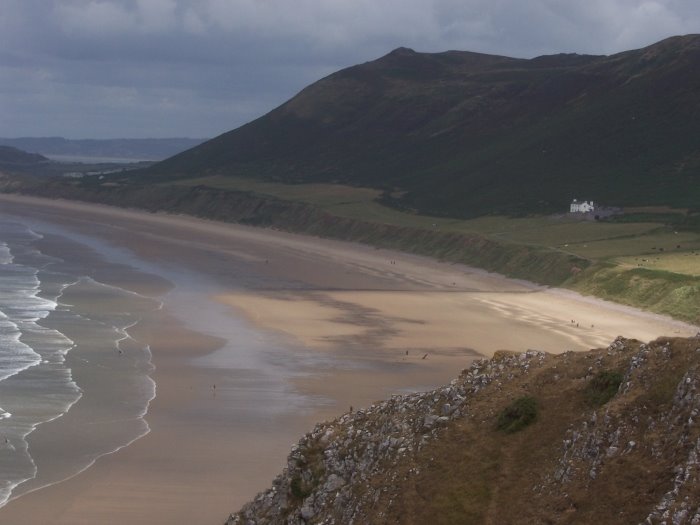
One thing I love about Rhossili beach, is the way the patterns in the sand shift - they're never the same two days in a row.


I had to keep Jake on his leash. Even though he's just a small dog, he showed an unhealthy interest in the sheep we met along the cliffs. Although he's too little to maul sheep, he could still scare them. It's still lambing season at the moment, and I would hate to be responsible for allowing my dog to scare a sheep into falling over a cliff, or aborting a lamb.

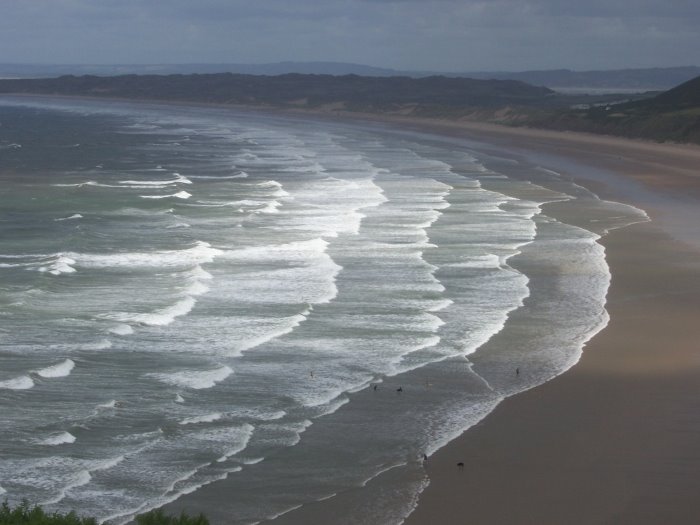
There was a strong breeze at Rhossili, but it was certainly nothing gale force. In fact, it was perfect. I love watching the white horses rushing ashore, something you won't see if the air's still. There were plenty of surfers and body-boarders around, taking advantage of the wind-whipped waves. Those unfamiliar with Rhossili should note that a strong wind can whip up here very quickly, at any time of the year. There is no large land mass anywhere between Rhossili and South America. The cliffs face the open Atlantic, and the winds can be unexpectedly cool, even at the height of summer. For that reason, it's always wise to carry an extra layer with you, so that you can keep warm, even in the summer, as the wind whips up lightning fast at times.


Ever since the TV gardening craze hit the UK, garden plants and designs seem to be growing ever more elaborate and exotic. I find the simplicity of our native wildflowers, and the way they'll appropriate any suitable nook or cranny to ensure their survival, far more appealing. Forget azaleas, nicotianas and cascades of multi-coloured blooms - just give me a lichen-covered drystone wall sprouting hawkweed instead. Although the hawkweed is yet to bloom at Rhossili this year, it won't be long before it does.


If you squint really hard at the following shot, you should be able to make out a few surfers along the shoreline of Rhossili Bay.

It must have been rougher at the top of Rhossili Down, than it was along the cliffs or at sea level. I had expected to see paragliders taking off from their usual launch spot, about two thirds of the way up, but I guess it was too rough for them.

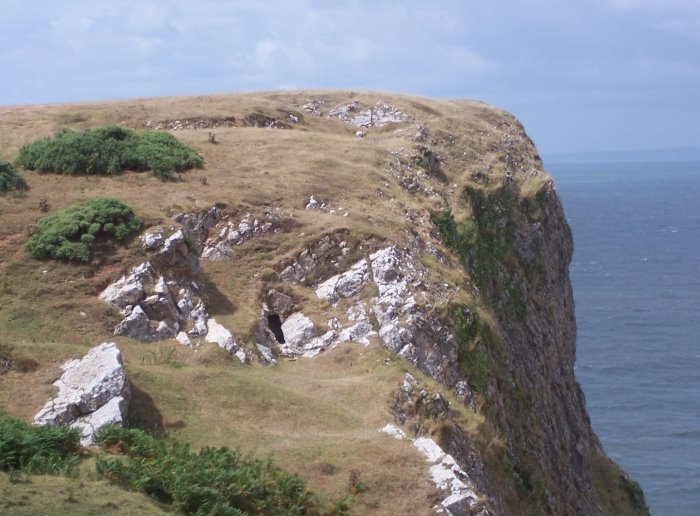
Does anyone know if this fissure in the rock is natural or man-made? I wonder if any creatures sleep in there at night? Perhaps a badger or fox has made it their home?

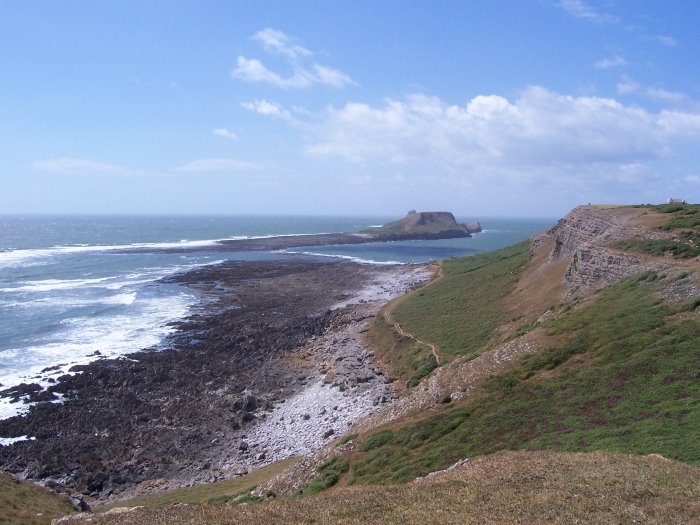
The sea is often an incredible green colour, especially going towards Worms Head, but alas, my camera never seems to do it justice.

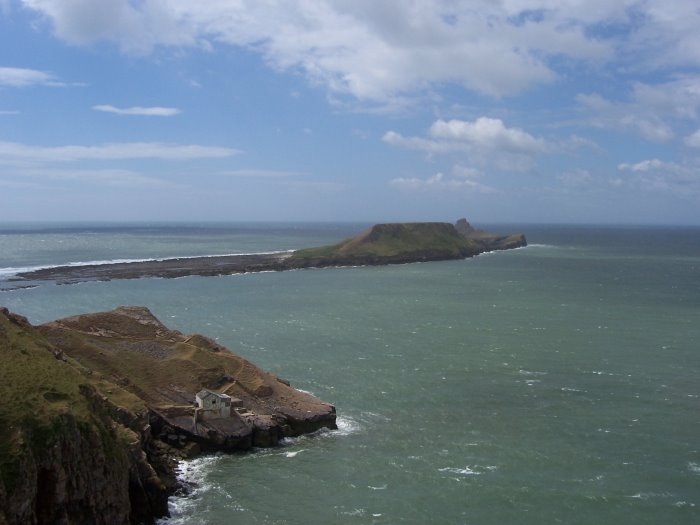
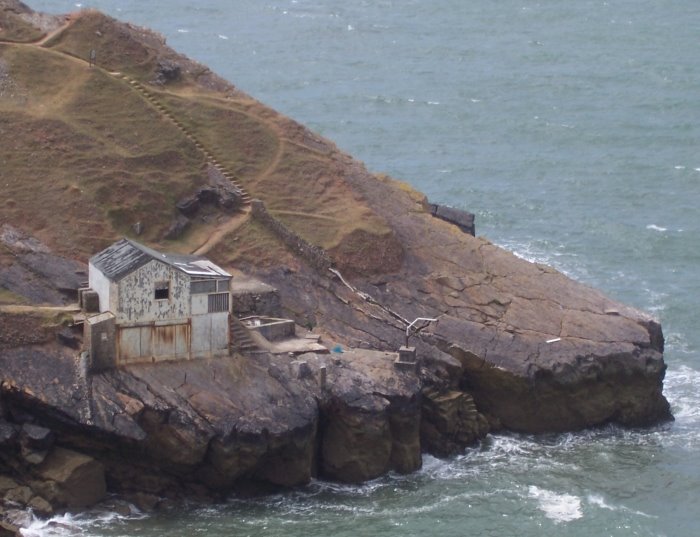
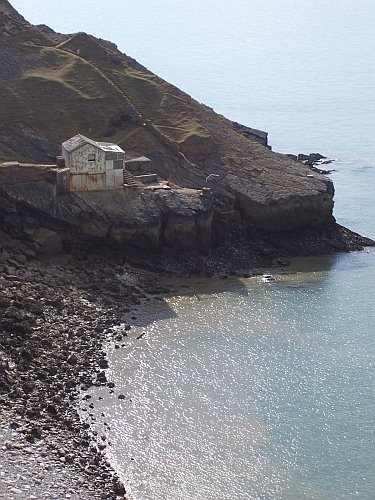
What's the history of Kitchen Corner? I'm sure I must have read it somewhere, but my mind has failed to absorb it. Does it have anything to do with the quarrying that went on along the cliffs a century or two ago? I've always been intrigued as to why there's a large tin shack and a rough-hewn little quayside, complete with its own stone staircase, in such a remote spot.


I was delighted, when we reached the old Coastguard hut overlooking the Worm, to discover that I was still pain-free and quite energetic. I decided to take my cousin, who was visiting from London, down to Fall Bay, as he's never been there.
Before long, we came to this rocky little valley, which at first, looked very treacherous. Closer inspection revealed some steep, but accessible tracks leading to the rocky shore below. However, given my intermittent and unpredictable balance problems caused by my arthritic neck, I decided to venture only a few metres down, although my cousin headed down a little further. Although there were no sheep around, I decided to keep Jake on his leash, in case he took a tumble off the cliffs.


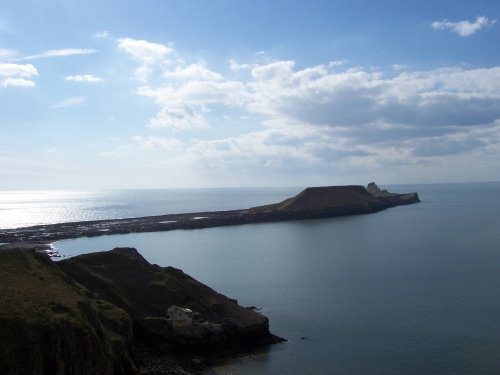
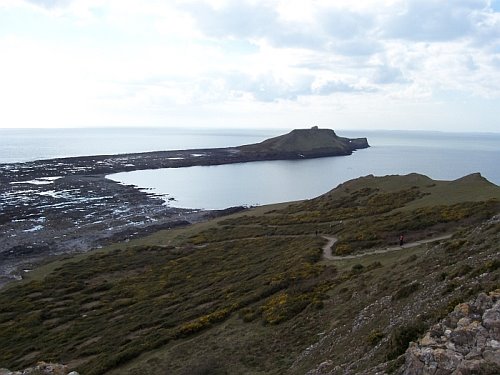
Glancing back the way we'd just come, we were rewarded with this new and interesting view of Worm's Head. As much as I love the Worm, I've become rather sick of photographing it from the same familiar old angles, time and time again.

As we forged ahead, Wayne, my cousin, got his first glimpse of Fall Bay.

The last time I visited Fall, I was met with a chorus from these ladies, who greeted me like an old friend. "Turn the other way and enjoy the view", I urged them, but they just baa-ed back and carried on munching.

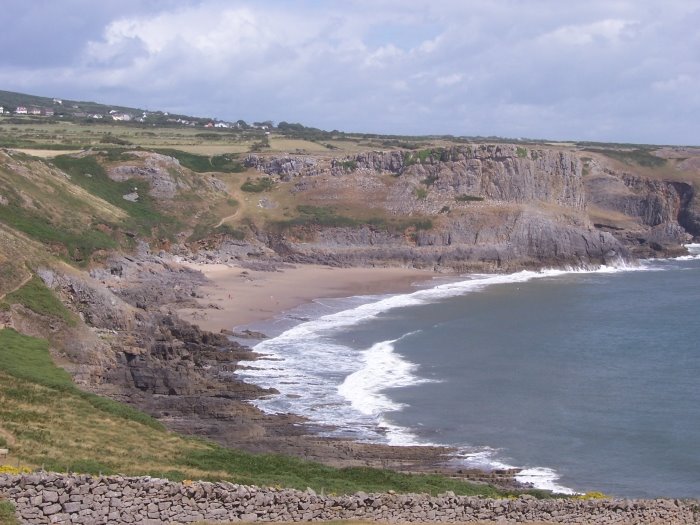
I'd forgotten what a charming little bay Fall is, with its neat, semi-circular shape. It reminds me a little of Lulworth Cove in Dorset.


I wish my camera had captured the striking visual effect of this rock formation, especially against the backdrop of the ocean. Better still, I wish I could stop blaming the camera for my own photographic inadequacies and inexperience. I really need to get over my fear of carrying my camera around with me, to try to get some better shots at Fall Bay.

I've always been intrigued by this collection of little boats, perched high and dry amongst the bracken on the cliffside. Anyone know whose they are and why they're there? There were even more there on Tuesday, as well as a few kayaks.


The fields near Fall Bay contained nothing more interesting than the remains of winter crops. Give it a few months, though, and there will be a swathe of golden flowers carpeting this field. Closer inspection will reveal nothing more exotic than the humble ragwort, but its visual effect, when viewed from a short distance, is stunning.

Does this amazing-looking rocky outcrop have a name? It must have been one heck of a volcanic eruption that formed this jagged peak, all those eons ago.

Wayne, Jake and I sat on this rocky outcrop overlooking Fall Bay, and enjoyed the late afternoon sunshine. Jake gratefully accepted some food and water, and had a little snooze. The last time I was here, I noticed a couple sitting on the jagged cliff, but I was more watchful of their restless red setters. These somewhat boisterous dogs kept making little forays across to where I was sitting, and I was getting more and more uncomfortable. Moments after I took these pics, the hounds suddenly tore towards me with great purpose, eyes blazing and tongues lolling, like something from the Hound of the Baskervilles.


I was mightily relieved when they sped right past, just a couple of feet from where I was sitting. However, my relief was shortlived. To my horror, they began worrying some sheep, snapping at them and driving them closer and closer to the edge of a sheer cliff. I immediately made the owners aware, pointing out that if the farmer came along, he would probably shoot the dogs first, and ask questions later. Fortunately, they were nice, reasonable people, who immediately brought the dogs under control.

Sadly, we could only spend a short time at Fall Bay, as we had to keep an eye on the clock. Had we missed our bus, we would have had another ninety minutes to wait. We passed through a wooden gate and followed a footpath, which skirted crop fields, en route to the village. The path was very muddy, and I almost slipped a number of times. As there were no sheep around, I let Jake off the leash for a little while. He ended up looking like a swamp monster, he became so caked with mud. But it was nothing a bath wouldn't fix, so I let him have some fun. We arrived back at Rhossili village in plenty of time, and had a soft drink in the beer garden of the Worm's Head Hotel, before heading home.
One thing I love about Rhossili beach, is the way the patterns in the sand shift - they're never the same two days in a row.


I had to keep Jake on his leash. Even though he's just a small dog, he showed an unhealthy interest in the sheep we met along the cliffs. Although he's too little to maul sheep, he could still scare them. It's still lambing season at the moment, and I would hate to be responsible for allowing my dog to scare a sheep into falling over a cliff, or aborting a lamb.

There was a strong breeze at Rhossili, but it was certainly nothing gale force. In fact, it was perfect. I love watching the white horses rushing ashore, something you won't see if the air's still. There were plenty of surfers and body-boarders around, taking advantage of the wind-whipped waves. Those unfamiliar with Rhossili should note that a strong wind can whip up here very quickly, at any time of the year. There is no large land mass anywhere between Rhossili and South America. The cliffs face the open Atlantic, and the winds can be unexpectedly cool, even at the height of summer. For that reason, it's always wise to carry an extra layer with you, so that you can keep warm, even in the summer, as the wind whips up lightning fast at times.


Ever since the TV gardening craze hit the UK, garden plants and designs seem to be growing ever more elaborate and exotic. I find the simplicity of our native wildflowers, and the way they'll appropriate any suitable nook or cranny to ensure their survival, far more appealing. Forget azaleas, nicotianas and cascades of multi-coloured blooms - just give me a lichen-covered drystone wall sprouting hawkweed instead. Although the hawkweed is yet to bloom at Rhossili this year, it won't be long before it does.


If you squint really hard at the following shot, you should be able to make out a few surfers along the shoreline of Rhossili Bay.

It must have been rougher at the top of Rhossili Down, than it was along the cliffs or at sea level. I had expected to see paragliders taking off from their usual launch spot, about two thirds of the way up, but I guess it was too rough for them.

Does anyone know if this fissure in the rock is natural or man-made? I wonder if any creatures sleep in there at night? Perhaps a badger or fox has made it their home?

The sea is often an incredible green colour, especially going towards Worms Head, but alas, my camera never seems to do it justice.

What's the history of Kitchen Corner? I'm sure I must have read it somewhere, but my mind has failed to absorb it. Does it have anything to do with the quarrying that went on along the cliffs a century or two ago? I've always been intrigued as to why there's a large tin shack and a rough-hewn little quayside, complete with its own stone staircase, in such a remote spot.


I was delighted, when we reached the old Coastguard hut overlooking the Worm, to discover that I was still pain-free and quite energetic. I decided to take my cousin, who was visiting from London, down to Fall Bay, as he's never been there.
Before long, we came to this rocky little valley, which at first, looked very treacherous. Closer inspection revealed some steep, but accessible tracks leading to the rocky shore below. However, given my intermittent and unpredictable balance problems caused by my arthritic neck, I decided to venture only a few metres down, although my cousin headed down a little further. Although there were no sheep around, I decided to keep Jake on his leash, in case he took a tumble off the cliffs.


Glancing back the way we'd just come, we were rewarded with this new and interesting view of Worm's Head. As much as I love the Worm, I've become rather sick of photographing it from the same familiar old angles, time and time again.

As we forged ahead, Wayne, my cousin, got his first glimpse of Fall Bay.

The last time I visited Fall, I was met with a chorus from these ladies, who greeted me like an old friend. "Turn the other way and enjoy the view", I urged them, but they just baa-ed back and carried on munching.

I'd forgotten what a charming little bay Fall is, with its neat, semi-circular shape. It reminds me a little of Lulworth Cove in Dorset.


I wish my camera had captured the striking visual effect of this rock formation, especially against the backdrop of the ocean. Better still, I wish I could stop blaming the camera for my own photographic inadequacies and inexperience. I really need to get over my fear of carrying my camera around with me, to try to get some better shots at Fall Bay.

I've always been intrigued by this collection of little boats, perched high and dry amongst the bracken on the cliffside. Anyone know whose they are and why they're there? There were even more there on Tuesday, as well as a few kayaks.


The fields near Fall Bay contained nothing more interesting than the remains of winter crops. Give it a few months, though, and there will be a swathe of golden flowers carpeting this field. Closer inspection will reveal nothing more exotic than the humble ragwort, but its visual effect, when viewed from a short distance, is stunning.

Does this amazing-looking rocky outcrop have a name? It must have been one heck of a volcanic eruption that formed this jagged peak, all those eons ago.

Wayne, Jake and I sat on this rocky outcrop overlooking Fall Bay, and enjoyed the late afternoon sunshine. Jake gratefully accepted some food and water, and had a little snooze. The last time I was here, I noticed a couple sitting on the jagged cliff, but I was more watchful of their restless red setters. These somewhat boisterous dogs kept making little forays across to where I was sitting, and I was getting more and more uncomfortable. Moments after I took these pics, the hounds suddenly tore towards me with great purpose, eyes blazing and tongues lolling, like something from the Hound of the Baskervilles.


I was mightily relieved when they sped right past, just a couple of feet from where I was sitting. However, my relief was shortlived. To my horror, they began worrying some sheep, snapping at them and driving them closer and closer to the edge of a sheer cliff. I immediately made the owners aware, pointing out that if the farmer came along, he would probably shoot the dogs first, and ask questions later. Fortunately, they were nice, reasonable people, who immediately brought the dogs under control.

Sadly, we could only spend a short time at Fall Bay, as we had to keep an eye on the clock. Had we missed our bus, we would have had another ninety minutes to wait. We passed through a wooden gate and followed a footpath, which skirted crop fields, en route to the village. The path was very muddy, and I almost slipped a number of times. As there were no sheep around, I let Jake off the leash for a little while. He ended up looking like a swamp monster, he became so caked with mud. But it was nothing a bath wouldn't fix, so I let him have some fun. We arrived back at Rhossili village in plenty of time, and had a soft drink in the beer garden of the Worm's Head Hotel, before heading home.
Wednesday, 4 March 2009
Gower Peninsula: Rhossili and Worm's Head
One of my favourite places on the Gower Peninsula, is the gorgeous Rhossili. Even in the depths of winter, it's a breathtaking location. Just be sure to wrap up warm if you visit at this time of year. Rhossili faces the open Atlantic, and is frequently buffeted by strong winds. The winter wind-chill can be quite bone-numbing. Even in warmer weather, it's always wise to carry an extra layer with you to Rhossili - the wind whips up suddenly there, and can sometimes be a little on the cold side even in the summer.
The day I took the following shots, Rhossili was a little warmer than I expected. Not warm, but bearable in a fleece and thick-knit sweater. The sun was rather elusive, hiding amongst the clouds a lot of the time. The temperature dropped significantly as a result, until the sun came out again.
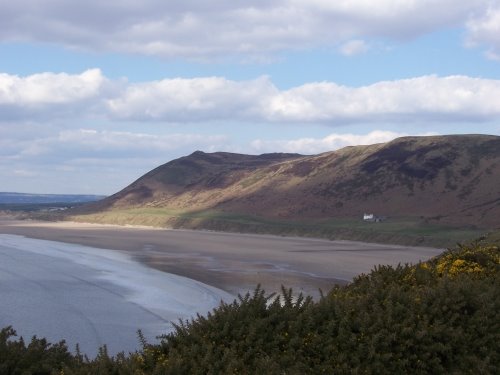
Disappointingly, the sea was really calm. One of the things I love about Rhossili, is standing up on the clifftop, as wind-whipped white horses roar ashore. The other thing I love about it is it always looks different. No matter how many photos I take of the place, I always manage to capture something different, depending on the weather, light, time of day, season, and so forth.
I'm glad I replaced my previous, very basic camera with one that has a zoom function. It gave me a closer view of the Old Rectory as it nestled under Rhossili Down. A herd of cattle grazed close by, making me a bit too wary to head towards the Rectory to get a closer shot. Although cows are generally harmless, they can be aggressive when they have calves, and may harm anyone who gets between them and their babies. So, as I can't run very fast, due to arthritis, I decided to take no chances.

I wish they had a few more of these along the cliffs. I meet at least two people per trip to Rhossili, who I have to warn NOT to head for the beach by clambering down the cliffs.

Why do people think they can just stroll down cliffs this high? It's usually adolescent males I have to dissuade from such silly behaviour.

See what I mean about different angles, light, and so on? These shots were all within a few minutes of each other, with just seconds between a couple of them.


I especially like this one, with the Old Rectory reflected in the wet sand.

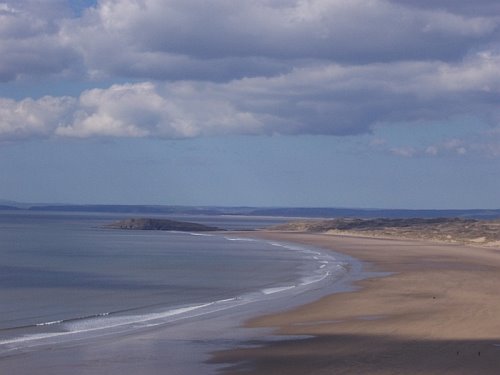
I struggled to get a decent shot of Burry Holmes, even with the zoom. I'll have to head down to the beach, walk towards Llangennith and try to get a decent shot of it that way.

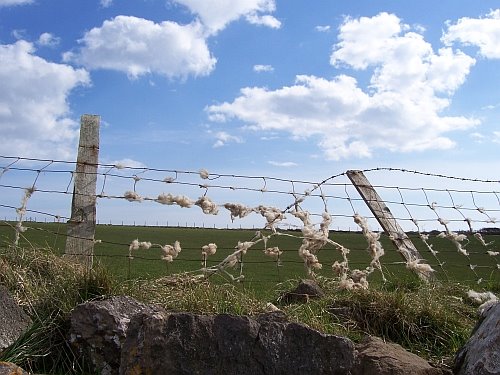
I spotted this popular sheep scratching spot along the way - it looks quite attractive in a funny, straggly kind of way, with its hanks of yarn fluttering in the breeze.

Still hampered by the elusive sun and the havoc it was causing me from a photographer's perspective, I managed to get a couple of shots of Kitchen Corner, the second one with the zoom.


I became aware of a lot of chattering as I strolled along, and spotted what looked like a school field trip.

When I finally reached headland opposite the Worm, and sank onto my usual perch, I was a little annoyed to find my camera's line of sight utterly ruined by this thing.

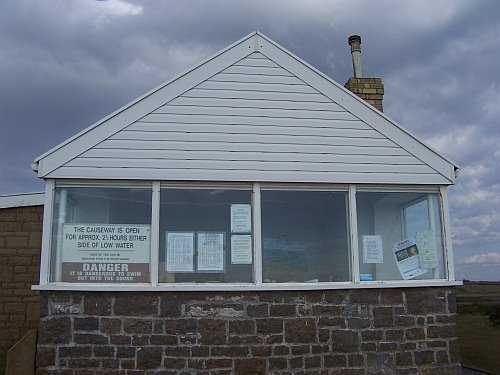
However, after a moment's thought, I decided I was being selfish. It's a good thing to have at the approach to the causeway which leads to Worm's Head. Visitors to the area simply do not appreciate the perils that may lie ahead, if they don't check the tide times. You will be cut off by the tide if you cross the causeway at the wrong time. Should you find yourself stranded on the island DO NOT attempt to swim across the sound. People have died doing so. Multiple strong currents converge at this spot, and even an Olympic swimmer could not fight them. The hut pictured below is now manned by a team of Coastwatch volunteers. Not only can they give you advice about tide times, safety, etc, but if you become stranded on the island, they will see you, and get appropriate help. Please don't ever try to swim back to shore.

I sat near the hut for a while, enjoying a snack. When thoroughly refreshed, I decided to shoot a video of the scene ahead of me. What a disaster that was. A large family group arrived, and my video was completely ruined by their chattering, including one rather effusive, and quite frankly, batty old biddy who kept wittering on about returning in the summer with a rubber dinghy. Literally all I could hear through the whole video was:
"Ooh Bet, we'll have to bring the rubber dinghy".
"Yes Mattie, the rubber dinghy. What d'you reckon Bill?"
"Aye, the rubber dinghy, mun. And a flask and some sandwiches".
"Ooh yes, love. Don't forget the flask and sandwiches. And a nice bit of cake".
"Aye. Bit of cake, mun".
AAAAAAAAAAAAARRRRRRRRRRRRRGGGGGGHHHHHH!

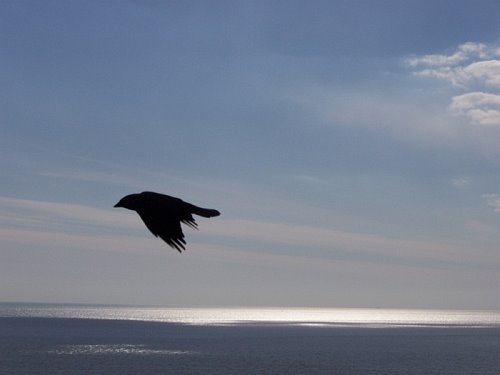
Then, after they left, I was briefly alone, and sat still for while, until this mad jackdaw tried to land on my head. I think he had a shock when he realised I was a living, breathing human, and not some new rock that had thrust its way out of the cliff overnight.

I walked on a little further, mindful of the time, and the fact that if I missed the next bus, I was stuck there until ten past seven.

After taking the above shot, I spotted this headland, Tear's Point, close to Fall Bay. I really must try to get over there when the weather's better.

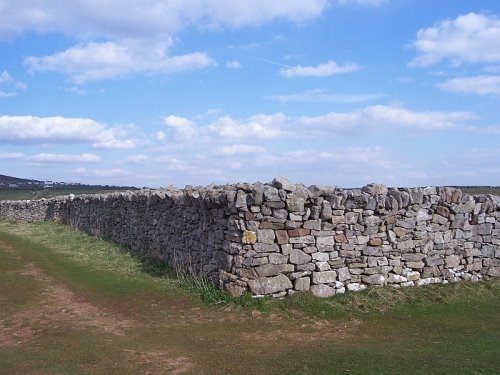
After photographing the headland, I headed back to the village, as I wanted to be sure of getting the 17.35 bus. I followed this drystone wall, spotting a rabbit running in the distance. Alas, the rabbit was too fast and too distant for me to get a shot of it, but I think the architecture of the wall looks quite interesting from this angle.

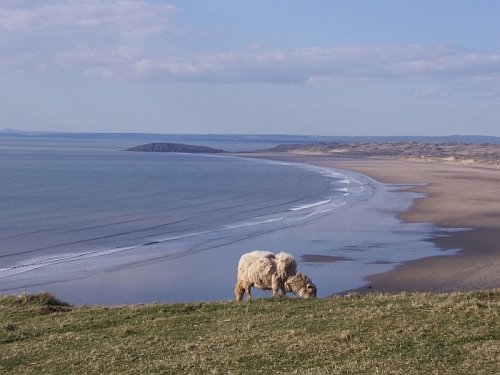
The clouds that kept engulfing the sun finally drifted off as I was making my way back - typical. I met these sheep grazing on the cliffs. Even though I'm no longer vegetarian, I won't eat lamb or mutton. I'd feel as if I was eating an old friend.


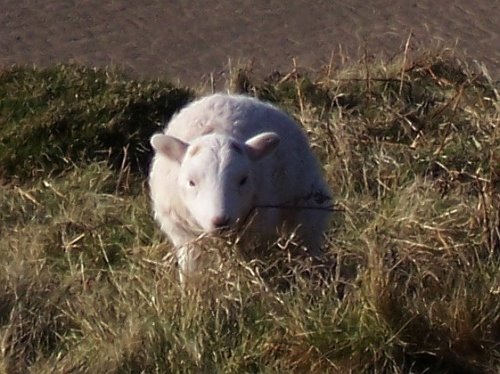
I met this adorable little creature near the gate back to the village. It only looked a couple of weeks old.


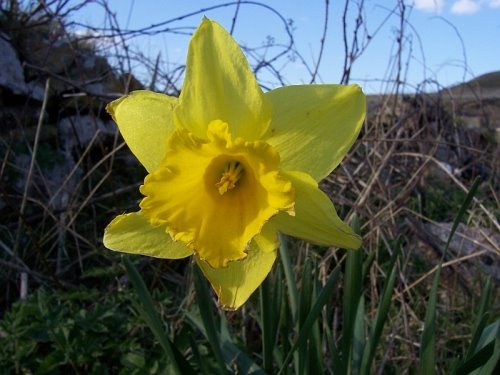
As I approached the bus stop, I spotted a clump of daffodils and decided to test the close-up function on my camera. Not bad, I suppose, although I've seen much better.

Did you know that the daffodil is the national flower of Wales? Well, you do now! Until the next time ...
The day I took the following shots, Rhossili was a little warmer than I expected. Not warm, but bearable in a fleece and thick-knit sweater. The sun was rather elusive, hiding amongst the clouds a lot of the time. The temperature dropped significantly as a result, until the sun came out again.
Disappointingly, the sea was really calm. One of the things I love about Rhossili, is standing up on the clifftop, as wind-whipped white horses roar ashore. The other thing I love about it is it always looks different. No matter how many photos I take of the place, I always manage to capture something different, depending on the weather, light, time of day, season, and so forth.
I'm glad I replaced my previous, very basic camera with one that has a zoom function. It gave me a closer view of the Old Rectory as it nestled under Rhossili Down. A herd of cattle grazed close by, making me a bit too wary to head towards the Rectory to get a closer shot. Although cows are generally harmless, they can be aggressive when they have calves, and may harm anyone who gets between them and their babies. So, as I can't run very fast, due to arthritis, I decided to take no chances.

I wish they had a few more of these along the cliffs. I meet at least two people per trip to Rhossili, who I have to warn NOT to head for the beach by clambering down the cliffs.

Why do people think they can just stroll down cliffs this high? It's usually adolescent males I have to dissuade from such silly behaviour.

See what I mean about different angles, light, and so on? These shots were all within a few minutes of each other, with just seconds between a couple of them.


I especially like this one, with the Old Rectory reflected in the wet sand.

I struggled to get a decent shot of Burry Holmes, even with the zoom. I'll have to head down to the beach, walk towards Llangennith and try to get a decent shot of it that way.

I spotted this popular sheep scratching spot along the way - it looks quite attractive in a funny, straggly kind of way, with its hanks of yarn fluttering in the breeze.

Still hampered by the elusive sun and the havoc it was causing me from a photographer's perspective, I managed to get a couple of shots of Kitchen Corner, the second one with the zoom.


I became aware of a lot of chattering as I strolled along, and spotted what looked like a school field trip.

When I finally reached headland opposite the Worm, and sank onto my usual perch, I was a little annoyed to find my camera's line of sight utterly ruined by this thing.

However, after a moment's thought, I decided I was being selfish. It's a good thing to have at the approach to the causeway which leads to Worm's Head. Visitors to the area simply do not appreciate the perils that may lie ahead, if they don't check the tide times. You will be cut off by the tide if you cross the causeway at the wrong time. Should you find yourself stranded on the island DO NOT attempt to swim across the sound. People have died doing so. Multiple strong currents converge at this spot, and even an Olympic swimmer could not fight them. The hut pictured below is now manned by a team of Coastwatch volunteers. Not only can they give you advice about tide times, safety, etc, but if you become stranded on the island, they will see you, and get appropriate help. Please don't ever try to swim back to shore.

I sat near the hut for a while, enjoying a snack. When thoroughly refreshed, I decided to shoot a video of the scene ahead of me. What a disaster that was. A large family group arrived, and my video was completely ruined by their chattering, including one rather effusive, and quite frankly, batty old biddy who kept wittering on about returning in the summer with a rubber dinghy. Literally all I could hear through the whole video was:
"Ooh Bet, we'll have to bring the rubber dinghy".
"Yes Mattie, the rubber dinghy. What d'you reckon Bill?"
"Aye, the rubber dinghy, mun. And a flask and some sandwiches".
"Ooh yes, love. Don't forget the flask and sandwiches. And a nice bit of cake".
"Aye. Bit of cake, mun".
AAAAAAAAAAAAARRRRRRRRRRRRRGGGGGGHHHHHH!

Then, after they left, I was briefly alone, and sat still for while, until this mad jackdaw tried to land on my head. I think he had a shock when he realised I was a living, breathing human, and not some new rock that had thrust its way out of the cliff overnight.

I walked on a little further, mindful of the time, and the fact that if I missed the next bus, I was stuck there until ten past seven.

After taking the above shot, I spotted this headland, Tear's Point, close to Fall Bay. I really must try to get over there when the weather's better.

After photographing the headland, I headed back to the village, as I wanted to be sure of getting the 17.35 bus. I followed this drystone wall, spotting a rabbit running in the distance. Alas, the rabbit was too fast and too distant for me to get a shot of it, but I think the architecture of the wall looks quite interesting from this angle.

The clouds that kept engulfing the sun finally drifted off as I was making my way back - typical. I met these sheep grazing on the cliffs. Even though I'm no longer vegetarian, I won't eat lamb or mutton. I'd feel as if I was eating an old friend.


I met this adorable little creature near the gate back to the village. It only looked a couple of weeks old.


As I approached the bus stop, I spotted a clump of daffodils and decided to test the close-up function on my camera. Not bad, I suppose, although I've seen much better.

Did you know that the daffodil is the national flower of Wales? Well, you do now! Until the next time ...
Labels:
Gower,
Gower Bays,
Gower Peninsula,
Llangennith,
Rhossili